
Microbial stabilization of beverages by filtration before filling
Microbial stabilization of beverages by filtration before filling: which pore size retains yeast and bacteria, and how to set up the prefilters and final membrane.
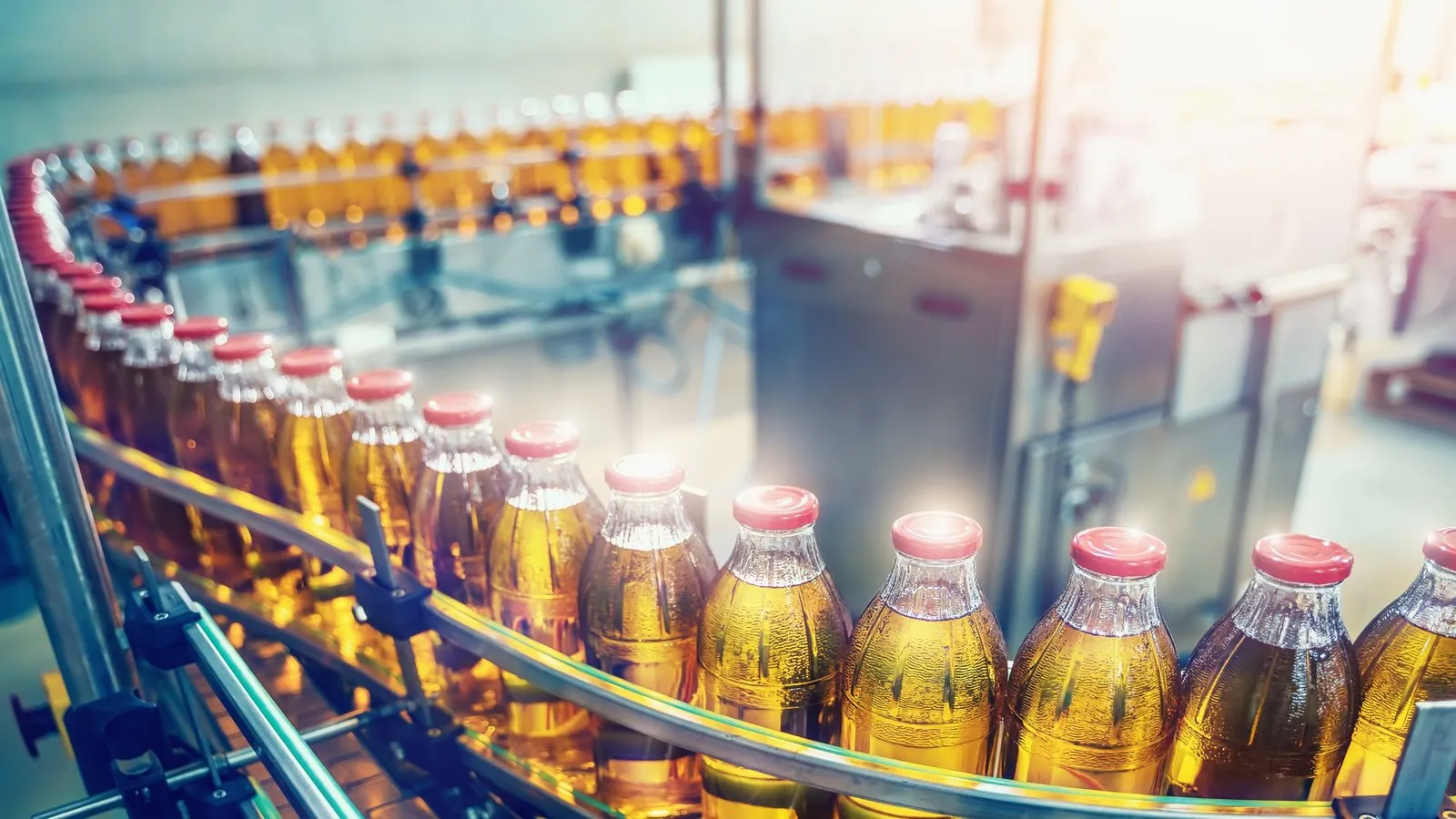
Microbial stabilization of a beverage by filtration means retaining, just before the filler, the yeasts and bacteria that could spoil it inside the container. It is done with a membrane cartridge of a defined rating—0.65 µm for yeast, 0.45 µm when bacteria must also be retained, and 0.2 µm when a sterile filtrate is required—installed at the end of a prefiltration train that removes the particle load.
For this to work, the final membrane has to be intact for every batch: it is sanitized or sterilized between uses and integrity tested before filtration. In this article we review which organisms define each rating, how the train is built, and what the LifePure and UltraPure cartridges for beverages and wine declare.
What microbial stabilization of a beverage means
A beverage packaged with viable yeasts or bacteria can spoil in the bottle. Yeasts ferment residual sugar and produce gas, turbidity, and sediment; in wine, lactic and acetic acid bacteria can also alter aroma and flavor. Stabilizing means removing those organisms before packaging, so the product reaches the consumer just as it left the plant.
Filtration does this by physical retention: the microorganism stays on the membrane and the beverage passes through. It is worth distinguishing two functions that are often confused:
- Clarifying means removing particles, colloids, and turbidity. It is done with depth media, such as pleated polypropylene or glass microfiber.
- Stabilizing means retaining microorganisms. That is the job of a membrane with declared microbial retention for each rating.
Both are needed. If the final membrane receives the turbidity that should have been removed during clarification, it clogs prematurely. The stages for water, syrups, soft drinks, and beer are laid out on our food and beverage filtration page.
Which rating retains yeast and which retains bacteria
A membrane’s rating is defined by the organism it retains in a challenge test. The catalogs for beverage cartridges use three references:
- 0.65 µm: Saccharomyces cerevisiae, the main yeast in alcoholic fermentation.
- 0.45 µm: Serratia marcescens, a small bacterium used as the challenge organism for that rating.
- 0.2 µm: Brevundimonas diminuta, the organism used to define a sterilizing-grade filter.
The LifePure F&B, LifePure Plus F&B, UltraPure F&B, and UltraPure Plus F&B declare more than 10⁷ organisms retained per cm² in those three ratings. The LifePure W is offered only in 0.65 µm, with more than 10⁷ S. cerevisiae per cm². The LifePure W Graded adds a 0.45 µm rating to reduce bioburden and yeast before bottling, with a declared titer reduction (Tr) of “> 10⁴–10⁶” for S. marcescens: it is a different membrane, with a different way of expressing retention.
| Model | Membrane | Ratings | Filtration area per 10″ | Applications per the catalog |
|---|---|---|---|---|
| LifePure F&B | Asymmetric PES | 0.2 to 1.2 µm | 6,000 cm² | Bottled water, soft drinks, syrups, ingredients, wines, sparkling wines, and beers |
| LifePure Plus F&B | Asymmetric PES | 0.1 to 1.2 µm | 8,000 cm² | Final filtration of bottled water, wine, and alcoholic beverages |
| LifePure W | PES, single layer | 0.65 µm | 8,000 cm² | Beer, wine, and sparkling wine |
| LifePure W Graded | Graded asymmetric PES | 0.45 and 0.65 µm | 9,000 cm² | Beer, wine, and sparkling wine |
| UltraPure F&B | Nylon 6,6 | 0.1 to 1.2 µm | 8,000 cm² | Final filtration of bottled water, wine, and alcoholic beverages |
| UltraPure Plus F&B | Nylon 6,6 | 0.1 to 1.2 µm | 9,500 cm² | Final filtration of bottled water, wine, and alcoholic beverages |
All six declare manufacturing in an ISO 7 clean area, materials compliant with FDA 21 CFR 177 for food contact, and non-toxic components according to the migration test of the Argentine Food Code (Código Alimentario Argentino) and Mercosur SGT3 standards.
Which rating should you choose? It depends on which organisms must be retained and on the beverage’s load. It helps to know the microbial load reaching the final filter and which organisms show up in the plant’s quality controls. A tighter rating retains more but gives less flow per cartridge, so it is best not to go finer than the product requires.
Between PES and nylon 6,6, the difference is not in retention: in those four models it is the same per rating. The LifePure W Graded catalog highlights the low color and aroma adsorption of its PES, and of these six, the UltraPure Plus F&B has the largest area per cartridge: 9,500 cm² per 10″. We compare the two membranes in PES or nylon membrane: how to choose the final filter.
How to build the train: prefiltration and final membrane
The final membrane is the finest stage in the train and the one to protect. The train spreads the load so that as little as possible reaches it: each stage removes something different and protects the next one.
| Stage | What it does | Example and catalog data |
|---|---|---|
| Clarification | Reduces particles and turbidity | ProFlow Plus: pleated polypropylene with an absolute rating from 0.5 to 20 µm and 8,000 cm² per 10″. Its catalog names wine, beer, carbonated beverages, and syrups |
| Final filter protection | Reduces the load reaching the membrane | PreFiber GF + PES: glass microfiber and asymmetric PES membrane in a single cartridge, with 6,700 cm² per 10″. Specified ahead of final membranes in wine and for clarifying beer, cider, and juices |
| Testable prefilter (optional) | Retains yeast and can be integrity tested | LifePure W, 0.65 µm |
| Final filtration | Retains yeast and bacteria according to the rating | LifePure F&B and LifePure Plus F&B; UltraPure F&B and UltraPure Plus F&B |
To monitor the train in operation, the differential pressure across each stage is measured. The catalogs for these cartridges set change-out at 2 bar; if the final membrane clogs sooner than expected, review the prefiltration. The complete process for wineries, with the prefilters for each stage, is on our step-by-step wine filtration page.
Sanitization and reuse: 80 °C water, chemicals, and steam
Membrane cartridges for beverages are reused between batches. Their catalogs declare that they withstand multiple 30- to 60-minute cycles of:
- hot water at 80 °C;
- peracetic acid and sodium hydroxide, up to 1% (10,000 ppm);
- steam at 121 °C, in-line or in an autoclave.
The conditions set by the same catalogs:
- Steam and hot water are restricted to single open-end cartridges (configurations B to E).
- For the LifePure F&B, UltraPure F&B, and UltraPure Plus F&B, peracetic acid is used at room temperature.
- The differential pressure in reverse flow must not exceed 0.69 bar at 25 °C, a limit to respect if the cleaning routine reverses the flow direction.
A typical routine: a water rinse to remove the product, chemical cleaning, another rinse, and sanitization with hot water, peracetic acid, or steam, always within the concentrations, temperatures, and times in each model’s catalog. When choosing chemicals, it helps to know that the LifePure W and LifePure W Graded membranes are declared stable from pH 1 to 14.
Integrity testing before filtration: the check that clears the filler
After each sanitization or steam cycle, and before each final filtration, test the integrity of the wetted membrane. A damaged cartridge does not show up in the pressure drop: only the test reveals it. How diffusive flow and bubble point tests are performed, and which errors invalidate them, is covered in our article on the filter cartridge integrity test.
What the catalogs for the beverage models declare:
- LifePure Plus F&B, UltraPure F&B, and UltraPure Plus F&B: 100% of cartridges are integrity tested at the plant, and diffusive flow and bubble point values are provided so users can repeat the test in their own installation.
- LifePure F&B: integrity checked at source by diffusive flow.
- LifePure W: integrity tested at the plant; it also serves as a testable prefilter.
- LifePure W Graded: integrity testable; on request, it ships rinsed with purified water and integrity tested at the plant.
How we help you build your filtration train
To define the final membrane rating, the prefiltration, and the number of cartridges, we need the type of beverage, the flow rate, the volume per batch, and how you sanitize today. Send us your line’s data and we will design the train with you.
Frequently asked questions
Does the final filter replace filler hygiene?
No. The membrane retains the microorganisms the beverage carries, but everything downstream—piping, filler, caps, and containers—must be sanitized. Otherwise, the product is recontaminated after the filter.
How many times can a membrane cartridge be reused?
The catalogs refer to multiple sanitization and sterilization cycles without a fixed number: service life depends on the beverage load, the prefiltration, and the cleaning routines. The cartridge is replaced when it fails the integrity test or when the differential pressure reaches 2 bar, the change-out value set by the catalogs.
Which housing is used for the final membrane?
A sanitary filter housing for cartridges with double 226 or 222 O-rings. For a single cartridge, the SaniFlow STE-01, made of AISI 304 stainless steel polished to Ra ≤ 0.8 µm. For higher flow rates, the SaniFlow STE-X, which takes 3 to 36 cartridges in its standard ordering code.


