
PES or nylon membrane: how to choose a final filter cartridge
PES or nylon 6,6 membrane for your final filter cartridge: structure, pore sizes, filtration area per 10″, chemical compatibility, and applications of each.
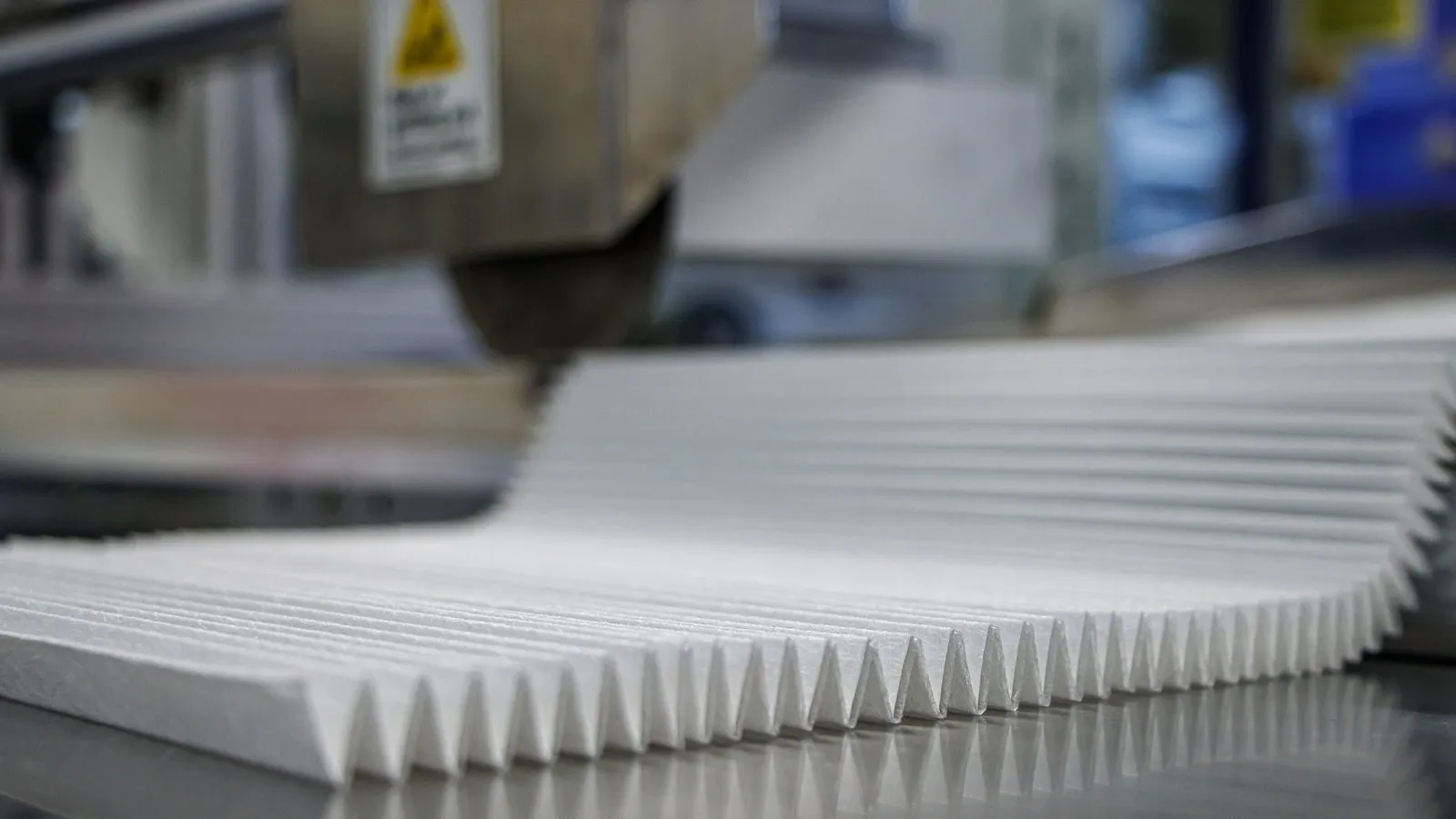
For a final filter cartridge, choosing a PES or nylon membrane (polyethersulfone or nylon 6,6) depends mainly on the fluid. The asymmetric PES in LifePure cartridges is used for beverages, wine, pharmaceutical solutions, and water, with high flow rates and high dirt-holding capacity. The nylon 6,6 in UltraPure cartridges is inherently hydrophilic and, in its pharmaceutical-grade versions, is specified for hydroalcoholic solutions and solutions with organic solvents, where PES has chemical compatibility limitations.
Both lines share the same format—2.75″ (70 mm) diameter, lengths from 10″ to 40″, ratings from 0.1 to 1.2 µm—and the same sterilization conditions. So the decision comes down to the fluid chemistry, the load it carries, and the documentation the process requires. Below we compare the two membranes based on what each model’s catalog declares.
The asymmetric PES membrane in LifePure
Polyethersulfone is a polymer used to make hydrophilic microfiltration membranes. In LifePure cartridges the structure is asymmetric: the pores are open on the outer face and gradually tighten down to the final pore. The fluid first passes through a zone that retains in depth and only at the end reaches the pore that defines the rating. According to the line’s catalogs, this provides high flow rates, low pressure drop, and high contaminant-holding capacity.
Some models also declare:
- The LifePure Protec Pharma describes its PES as hydrophilic, instantly wettable, and low in protein adsorption.
- The LifePure W and the LifePure W Graded declare the membrane stable across a pH range of 1 to 14.
- The LifePure W Graded highlights low adsorption of color and aroma compounds, “unlike nylon membranes,” according to its catalog.
As a general materials principle, nylon adsorbs more protein than PES. In protein solutions, where you do not want to lose product on the filter, this usually tips the balance toward PES.
Filtration area ranges from 6,000 cm² per 10″ in the standard series (LifePure F&B and LifePure) to 8,000 or 9,000 cm² in the Plus and W versions, and is 6,500 cm² in the dual-layer Protec models.
The nylon 6,6 membrane in UltraPure
Nylon 6,6 is a polyamide that forms inherently hydrophilic membranes: they wet with water without additional treatment. The UltraPure F&B, UltraPure, UltraPure Plus F&B, and UltraPure Plus catalogs describe the membrane as symmetric, with a uniform pore throughout its thickness, and attribute high flow rates with very low pressure drop to it.
The pharmaceutical-grade versions add two things:
- A membrane free of resins and surfactants, in the UltraPure Plus Pharma and the UltraPure Protec Pharma. The UltraPure Plus Pharma also declares low extractables and broad chemical compatibility.
- Solvent applications: hydroalcoholic mixtures, solvents and solutions with a high solvent content, HPLC mobile phases, antibiotics in non-aqueous formulations, organic solvent cleaning systems, and ophthalmic solutions with surfactants.
Filtration area is 8,000 cm² per 10″ in the UltraPure F&B, UltraPure, and UltraPure Plus; 9,500 cm² in the UltraPure Plus F&B and the UltraPure Plus Pharma; and 7,500 cm² in the dual-layer UltraPure Protec Pharma.
PES or nylon 6,6 membrane: comparison by criterion
| Criterion | LifePure (asymmetric PES) | UltraPure (nylon 6,6) |
|---|---|---|
| Structure | Pores open on the outer face that tighten toward the final pore | Inherently hydrophilic; symmetric according to the UltraPure F&B, UltraPure, UltraPure Plus F&B, and UltraPure Plus catalogs |
| Ratings | 0.1 to 1.2 µm depending on the model; LifePure W at 0.65 µm and LifePure W Graded at 0.45 and 0.65 µm | 0.1 to 1.2 µm in single layer |
| Area per 10″, single layer | 6,000 to 9,000 cm² | 8,000 to 9,500 cm² |
| Dual layer (Protec) | LifePure Protec and LifePure Protec Pharma: 6,500 cm² | UltraPure Protec Pharma: 7,500 cm² |
| What the catalogs highlight | Low protein adsorption (LifePure Protec Pharma); pH 1 to 14 (LifePure W and LifePure W Graded); low color and aroma adsorption (LifePure W Graded) | Free of resins and surfactants, and suitable for solvents (UltraPure Plus Pharma and UltraPure Protec Pharma) |
| Pharmaceutical grade, with ASTM F838-20, USP <88>, and USP <665> | LifePure Plus Pharma and LifePure Protec Pharma | UltraPure Plus Pharma and UltraPure Protec Pharma |
| Models for wine, beer, and beverages | LifePure F&B, LifePure, LifePure Plus F&B, LifePure W, and LifePure W Graded | UltraPure F&B, UltraPure, UltraPure Plus F&B, and UltraPure Plus |
In practice, the structure changes how the membrane loads. In an asymmetric membrane, the open zone retains part of the particles before the final pore, so it tolerates more load before clogging. In a symmetric membrane, the pore is the same throughout the thickness and the load builds up mainly on the inlet face, so prefiltration matters more. In both, more area per cartridge means more flow at the same pressure drop: the UltraPure Plus F&B and UltraPure Plus Pharma reach 9,500 cm² per 10″.
Chemical and thermal compatibility according to the catalogs
For sterilization and sanitization, the catalogs for both lines agree:
- Steam at 121 °C, in-line or in an autoclave, in multiple 30- to 60-minute cycles.
- Hot water at 80 °C, in 30- to 60-minute cycles.
- Chemicals: peracetic acid and sodium hydroxide up to 1% (10,000 ppm).
- Maximum differential pressure: 5.5 bar at 25 °C in the forward direction and 0.69 bar in reverse flow, with cartridge change-out at 2 bar.
- Materials: compliant with FDA 21 CFR 177 for food contact and with Directive 2002/72/EC, with a polypropylene cage and core.
In both lines, steam and hot water are restricted to single open-end cartridges (configurations B to E).
The differences show up with aggressive fluids. On the PES side, the published data point is the pH 1 to 14 stability of the LifePure W and LifePure W Graded. On the nylon side, the UltraPure Plus Pharma and UltraPure Protec Pharma catalogs specify it for the solvents and hydroalcoholic mixtures where PES has limitations. The UltraPure catalogs do not give a pH range and, as a general materials principle, polyamides have poor resistance to strong acids: with highly acidic fluids, consult us before choosing nylon.
None of the catalogs includes a chemical compatibility chart. For a specific solvent, concentration, or contact time, compatibility is confirmed case by case.
Where each membrane fits best
| If the fluid is… | Membrane | Models |
|---|---|---|
| Aqueous pharmaceutical solution: injectables, ophthalmics, culture media, buffers, WFI | PES | LifePure Plus Pharma and LifePure Protec Pharma |
| Hydroalcoholic mixture, organic solvent, or HPLC mobile phase | Nylon 6,6 | UltraPure Plus Pharma and UltraPure Protec Pharma |
| Beer, wine, or sparkling wine, with yeast retention at 0.65 µm | PES | LifePure W and LifePure W Graded |
| Bottled water, wine, or alcoholic beverages, in final filtration | PES or nylon 6,6 | LifePure F&B and LifePure Plus F&B; UltraPure F&B and UltraPure Plus F&B |
| Fluid with a high particle load or bioburden | PES or nylon 6,6, dual layer | LifePure Protec and LifePure Protec Pharma; UltraPure Protec Pharma |
| Water treatment | PES or nylon 6,6 | LifePure Plus and LifePure Protec; UltraPure Plus |
In beverages and wine, both membranes have final filtration models with the same declared retention per rating: the LifePure F&B, the LifePure Plus F&B, the UltraPure F&B, and the UltraPure Plus F&B retain more than 10⁷ Saccharomyces cerevisiae per cm² at 0.65 µm and more than 10⁷ Serratia marcescens per cm² at 0.45 µm. We explain how to build that train in microbial stabilization of beverages before filling. For pharmaceuticals, our filtration for pharmaceuticals and biotech page organizes the models by process step.
Five questions to choose between PES and nylon
- Is it a pharmaceutical formulation with alcohol or organic solvents? Start with pharmaceutical-grade nylon 6,6: UltraPure Plus Pharma or UltraPure Protec Pharma. For wine and alcoholic beverages, there are models with both membranes.
- Is it an aqueous solution with proteins? PES, with the low protein adsorption declared for the LifePure Protec Pharma.
- Do color and aroma matter, as in wine? The LifePure W Graded catalog highlights the low adsorption of its PES.
- What load does the fluid carry? With a heavy particle load or bioburden, a dual-layer Protec version or a separate prefilter.
- What documentation does the process require? If you need ASTM F838-20, USP <88>, and USP <665>, the Pharma models: LifePure Plus Pharma and LifePure Protec Pharma, UltraPure Plus Pharma and UltraPure Protec Pharma.
How we help you choose the membrane
We manufacture both lines in an ISO 7 cleanroom. If you are deciding between PES and nylon for your final filter, tell us about your fluid and process—composition, temperature, load, and the documentation you need—and we will recommend the membrane, rating, and construction.
Frequently asked questions
Can I switch from PES to nylon without changing the housing?
Yes, if the format matches. LifePure and UltraPure cartridges share the 2.75″ (70 mm) diameter, lengths from 10″ to 40″, and adapter configurations with double 226 or 222 O-rings. When you change membranes, use the integrity values for the new model and, in a pharmaceutical process, review the validation.
Do the membranes release extractables?
The F&B and Pharma models in both lines are rinsed with purified water after manufacturing to remove extractables. In pharmaceutical grade, the LifePure Plus Pharma and the UltraPure Plus Pharma declare a USP <665> study with no significant levels of compounds that interfere with the process. The UltraPure Plus Pharma membrane is also free of resins and surfactants.
What is the maximum filtration temperature for these cartridges?
The LifePure and UltraPure catalogs do not give a maximum operating temperature: the maximum differential pressures are stated at 25 °C. The 80 °C for hot water and the 121 °C for steam are sanitization and sterilization conditions, not filtration conditions. If your process filters hot fluids, contact us before choosing the model.


